Interior designers are pulling sofas out of living rooms. Homes & Gardens ran a feature on it. LivingEtc listed 14 alternatives. Houzz published a guide to "no-sofa living rooms" with 10 seating options that aren't couches.
This isn't a fringe thing anymore. It's a real design movement, and it's picking up speed in 2026.
The logic is simple: a sofa is the most expensive, heaviest, least flexible piece of furniture in your house, and you probably use it wrong anyway. Designers are asking why we keep defaulting to it when the alternatives are cheaper, more comfortable, and better suited to how people actually live.
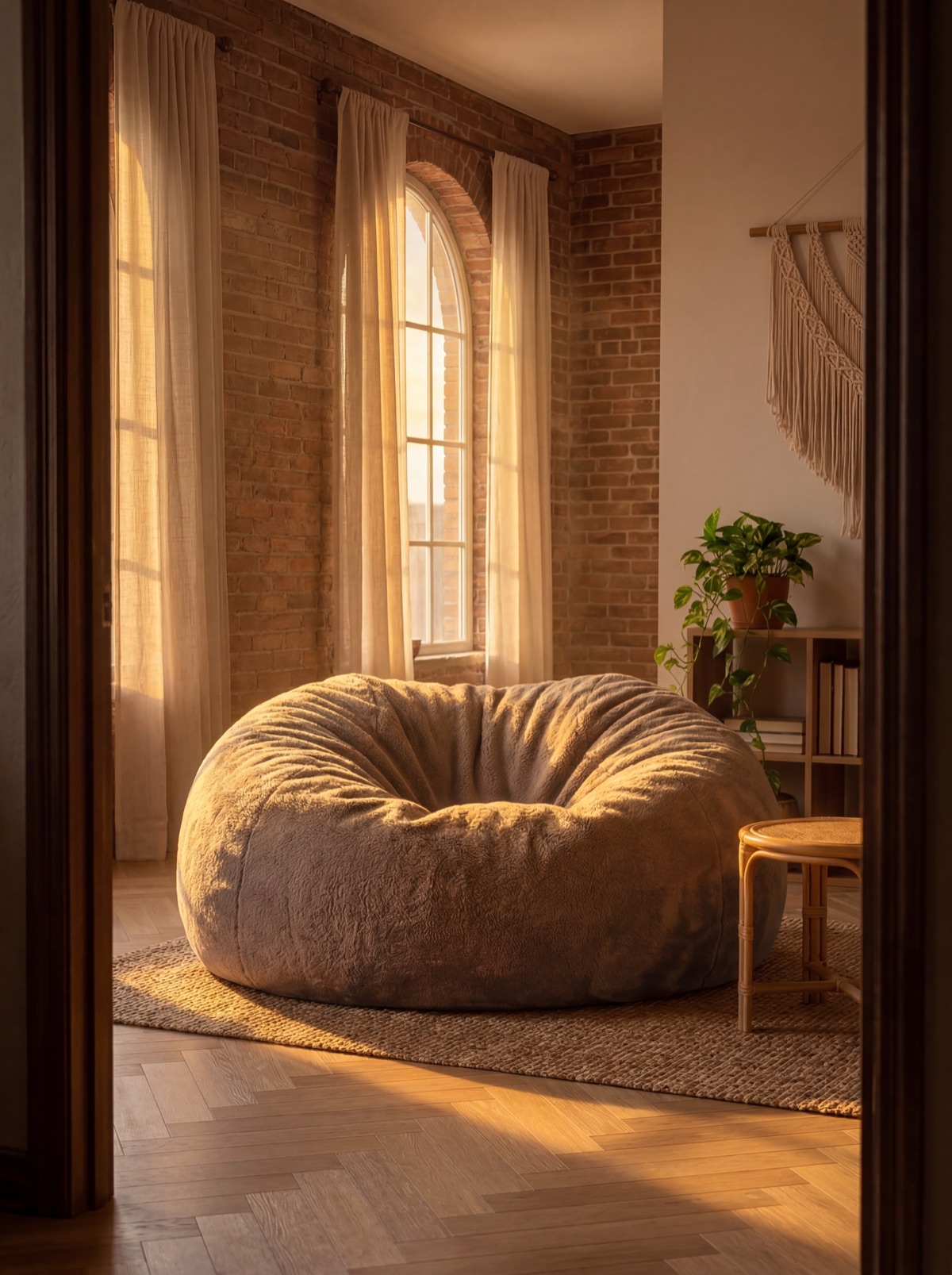
Photo: Lily W., Cosac customer
Why Designers Are Ditching Sofas
The 2026 design trend reports keep circling the same ideas: organic shapes, low-profile furniture, flexible layouts, comfort-first styling. Curved sofas with deeper seats. Banquette seating borrowed from restaurants. Armchair clusters instead of one big couch.
The through-line is that rigid, wall-hugging sofas feel dated. Designers want rooms that breathe. Furniture you can rearrange on a Tuesday without calling your partner for backup.
Houzz data from their trend reports shows that low seating enhances openness and sight lines in compact spaces. Translation: when you pull out the sofa, the room immediately feels bigger. Not because you removed square footage of furniture (you did), but because you removed the visual bulk. A sofa is a wall of fabric. Everything behind it disappears.
What People Actually Put in the Room
The alternatives people are gravitating toward break into a few categories.
Armchair clusters. 2 to 4 chairs arranged for conversation instead of a single sofa facing the TV. This works well for people who actually talk to each other (and less well for people who want to lie down, which is, honestly, most of us).
Daybeds. A low, flat lounging surface that doubles as a guest bed. Beautiful in photos. A little awkward in practice if you want to sit upright and watch something.
Floor cushions and poufs. The bohemian route. Cheap, flexible, easy to rearrange. But floor cushions compress fast, they're hard to get out of (especially after 40), and they tend to migrate across the room like they're trying to escape.
Beanbags. The option that solves the comfort problem the others don't. A large beanbag gives you floor-level seating with actual support. You can sit upright, lean back, sprawl, or curl up. It's flexible like floor cushions but built like real furniture.
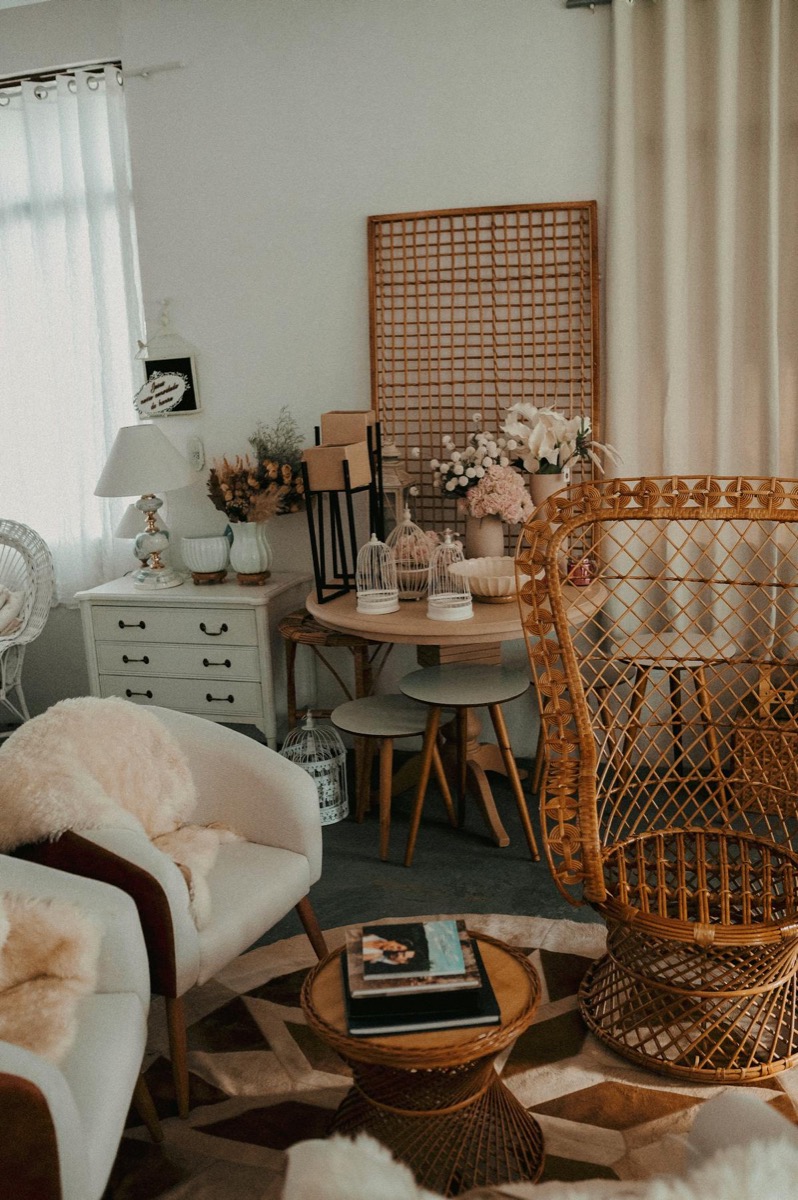
Photo: Pexels
The Comfort Gap
Here's where most no-couch setups fall apart. The room looks great. The arrangement photographs well. Then you actually sit in it for 2 hours and your back has thoughts.
Armchairs are fine for 30 minutes. Poufs are fine for 15. Floor cushions are fine until you try to stand up. The design publications show these rooms styled for a photoshoot, not for a 3-hour movie marathon on a Saturday night.
The missing piece in most no-couch living rooms is something you can actually sink into. Something that supports extended lounging the way a sofa does (or tries to) but without the bulk, the rigid frame, and the $2,000 price tag.
A 6ft beanbag fills that gap. It sits low to the ground (matching the no-couch aesthetic), weighs 35 lbs (so you can reposition it in seconds), and supports 2 to 3 people in any position they choose. It's the anchor piece these rooms are missing.
How to Set One Up
The practical version of a no-couch living room is simpler than the design magazines make it look. You need 3 things: a primary lounging surface, a secondary seating option, and a surface for drinks.
Primary: A large beanbag (6ft or 7ft) positioned where your couch used to be. This is where you'll spend 80% of your time. Movies, reading, napping, scrolling. It handles all of it.
Secondary: 1 or 2 accent chairs, a bench, or a couple of floor cushions for when you have people over. These fill the room visually and give guests options. (Most guests will end up on the beanbag anyway. You'll see.)
Surface: A low coffee table or a couple of side tables. You need somewhere to put your drink. This is non-negotiable. (A beanbag is many things. A coaster is not one of them.)
That's it. The entire setup costs a fraction of a mid-range sofa, takes 10 minutes to arrange, and works in rooms of any size.
What Happens to the Room
People who pull their couch out report the same thing: the room wakes up.
Without a sofa eating 40 square feet of floor space, the room feels twice as big. Kids suddenly have space to play in the living room. The dog can actually run a lap. You can rearrange the whole layout in under a minute for different occasions.
Movie night: beanbag front and center, lights down, blankets out. Friends over: slide the beanbag to one side, pull up the accent chairs, open up a conversation circle. Solo Tuesday: beanbag against the wall by the window with a book and a lamp. Same room, 3 completely different layouts.
A sofa locks you into one arrangement. Without it, the room becomes genuinely flexible for the first time.
The Aesthetic Question
The worry is always the same: "Will it look like I can't afford furniture?"
Intentional minimalism looks completely different from empty. A beanbag in charcoal sherpa next to a wood side table with a plant on it doesn't read as "broke." It reads as "considered." The 2026 design trend is literally moving in this direction: organic shapes, warm textures, grounded furniture, fewer pieces with more purpose.
Layer in a good rug, some textured throw blankets, and warm lighting. The room looks like a Scandinavian design studio, not a dorm.
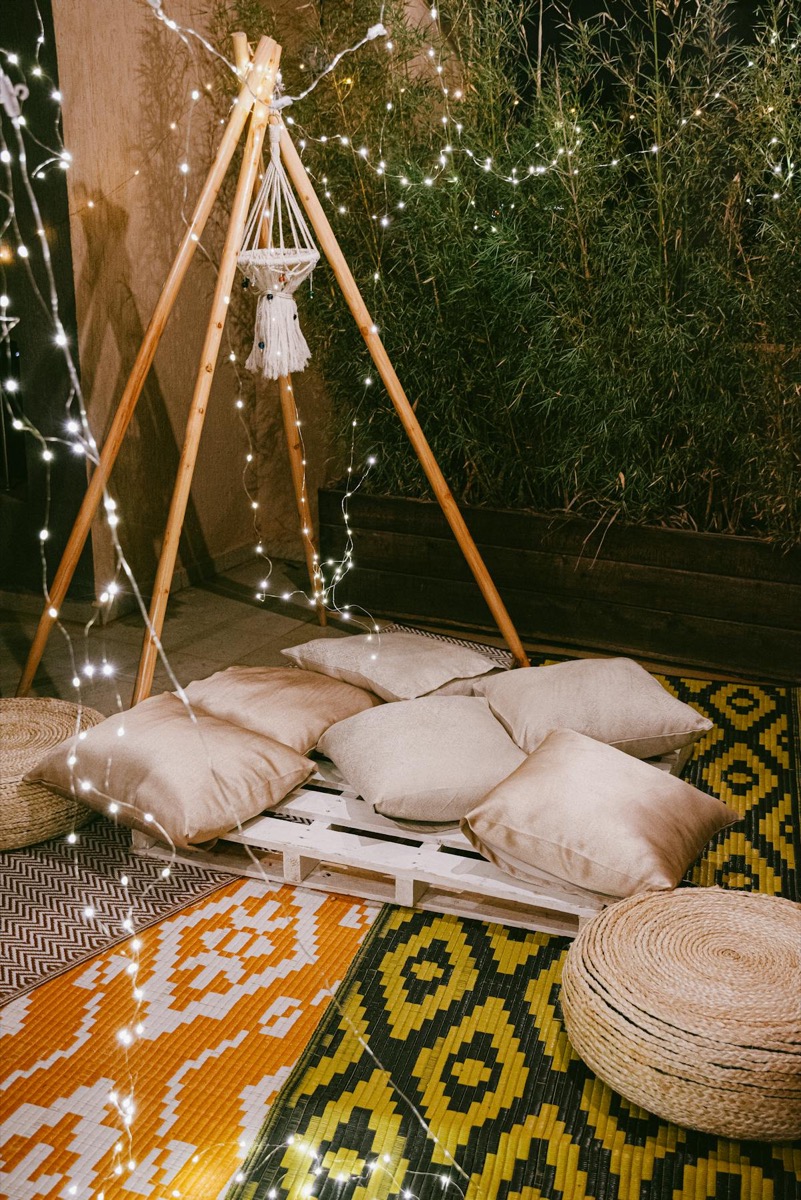
Photo: Pexels
The trick is quality over quantity. One premium beanbag with sherpa fabric looks better than 3 pieces of mid-range furniture competing for attention. The room calms down when there's less in it.
Who This Works For
Small apartments. A sofa in a 500-square-foot apartment is a space hog. A beanbag gives you the same lounging function in half the footprint, and you can move it to different spots as needed.
Families with young kids. Soft, low-to-the-ground seating with no hard edges or sharp corners. The cover washes in a machine cycle. Kids can jump on it without anyone worrying about the frame breaking.
Anyone who just moved. You need to sit somewhere while you figure out the rest. A $249 beanbag is the smartest first purchase because it works in any room, any layout, any apartment. You might never get around to buying the sofa. (Many people don't.)
People who already have too much furniture. Sometimes the upgrade is subtraction. Pull the couch out, drop a beanbag in, and see how the room changes. Give it a week. If you miss the sofa, put it back. (You probably won't.)
The Numbers
Mid-range sofa: $1,200 to $1,800 plus $150 delivery. Dominates the room for 5 to 8 years before the cushions give up.
No-couch setup with a Cosac 6ft ($299), 2 accent chairs from a secondhand shop ($50 to $100 each), and a side table ($40): roughly $500 total. More flexible, more comfortable, easier to rearrange, easier to clean, and easier to move when you switch apartments.
The Cosac comes with free shipping and a 60-day money-back guarantee. If the no-couch thing doesn't click, send it back. But based on the 332 customers who rated it 4.7 out of 5, the couch isn't coming back in.
See the beanbag that's replacing couches →
See the beanbag that's replacing couches →